
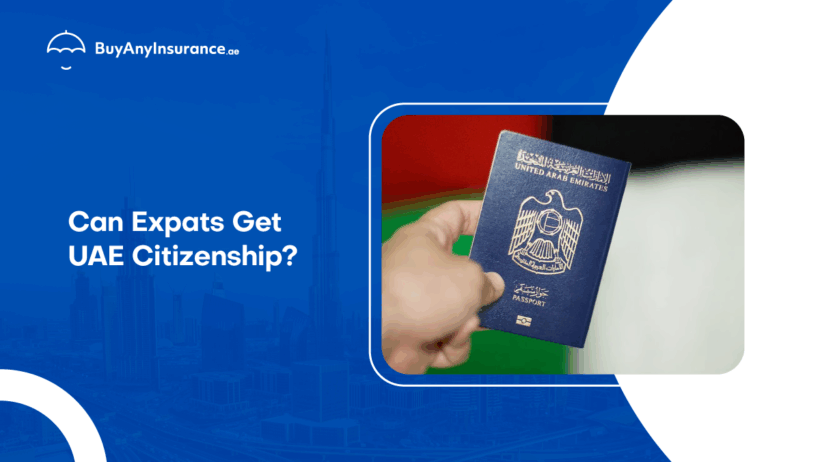

Can expats get UAE citizenship?
Yes, expats can get UAE nationality, but not through the normal online application methods for getting citizenship and also not as a birthright.
Then how can expats get UAE citizenship?
Foreign expatriates can only get UAE nationality through Government Nomination(for exceptional investors, doctors, scientists and creatives), 30 years of legal residence, or marriage to an Emirati citizen.
Before the recent updated executive regulations of the UAE Nationality Law, you needed to get UAE citizenship only through marriage.
UAE Citizenship vs Residency
| Question / Criteria | Official Policy | Requirements & Conditions |
| Direct Citizenship Application | ❌ Not Available | Candidates must be nominated by the Cabinet, Rulers’ Courts, or Executive Councils. |
| Birth in Dubai / UAE | ❌ No Birthright | Children of foreign parents take their parents’ home nationality. |
| Property Investors | Nomination / Visa | Eligible for government nomination or a 10-Year Golden Visa. |
| Dual Nationality Allowed? | Yes (Conditional) | Nominated expats can keep their birth passport if their home country permits it. |
| Long-Term Residence Route | 30 Years | Continuous legal residence, fluent Arabic, clean record, and federal approval. |
How to Get UAE Citizenship: The Legal Way
The only way to get UAE citizenship for any expat(an entrepreneur from the US or UK, a skilled professional from India or Pakistan, or an investor from the GCC, Europe, or East Asia) is to qualify under identical legal frameworks established by the UAE’s Federal Authority for Identity, Citizenship, Customs and Port Security (ICP).
How can foreign investors, doctors, and professionals get citizenship?
Any foreign expat who has an exceptional contribution towards the UAE’s economy, health, technology, or invention can obtain Emirati nationality, but only through executive nomination.
You cannot directly apply; you must be nominated by a Ruler’s Court, Crown Prince Court, Executive Council, or the UAE Cabinet.
- Real Estate Investors: Must own real estate property in the UAE.
- Doctors & Medical Specialists: Must specialize in unique or highly demanded scientific disciplines with at least 10 years of practical experience and membership in a recognized professional organization.
- Scientists & Researchers: Must be active researchers in universities, research centers, or the private sector, backed by international awards, grants, or official recommendation letters from recognized UAE scientific bodies.
- Inventors: Must hold at least one patent approved by the UAE Ministry of Economy (or a recognized international body) along with a Ministry recommendation letter.
- Creative Talents & Intellectuals: Artists, authors, and innovators with international awards and official recommendation letters from relevant UAE government entities.

How You Can Renew Your Visit Visa In the UAE?
How many years do you have to live in Dubai to become a citizen?
A foreign national can qualify for UAE citizenship after at least 30 consecutive years of lawful residence in the UAE. This is called the naturalization pathway to get UAE nationality.
You do not only need to meet a 30-year timeframe to get an automatic passport. People who want to apply for 30 years naturalization pathway to get UAE citizenship must have fluent Arabic language proficiency, have a clean criminal record, prove a lawful source of income, pass security clearances, and receive final Council of Ministers approval.
Can you get UAE citizenship by marriage?
Only foreign women married to Emirati men can apply for citizenship by marriage, and that on condition if;
- The women stays married for 7 years and has children from her Emirati husband.
- Women must be married for 10 years to Emirati male if there are no children.
If any Emirati female marries an expat, the expat male does not get Emirati citizenship.
Birth & Passport Rules for Children of Expats For UAE Nationality
If I am born in the UAE, am I a citizen?
No. The UAE enforces nationality strictly by blood descent (Jus Sanguinis), not location of birth (Jus Soli).
A child born in a Dubai hospital to foreign parents (e.g., Indian, British, Pakistani, or American expats) has the nationality of their parents. Birth in the UAE grants kids long-term residency rights through parental sponsorship, but does not grant an Emirati passport.
What happens if a child has an Emirati mother and a foreign father?
Children born to an Emirati mother and a foreign father do not receive automatic nationality at birth.
Emirati mother can appliy for her children to receive UAE citizenship once they reach 6 years of age.
Dual Nationality & Passports for Expats
Can you hold dual citizenship in the UAE?
Yes, for nominated citizens.
Foreign expats who receive UAE nationality via executive nomination (investors, scientists, doctors, and creatives) are permitted under federal law to retain their original passport, provided their home country allows dual citizenship.
Note: Individuals who get Dubai citizenship through marriage or classic 30-year naturalization are typically required to renounce their former passport.
Can you live in Dubai permanently without citizenship?
Yes. Most foreign nationals build long-term lives in Dubai using employment, business, or investor residency visas.
The UAE Golden Visa provides a renewable 5- or 10-year residency for property owners, entrepreneurs, software developers, and top-tier professionals.
Golden Visa holders retain their home passport while enjoying long-term stability, tax residency benefits, and full property ownership without needing citizenship.
Staying in the UAE long-term on a Golden Visa or Investor visa?
Secure your residency with UAE-compliant health insurance. Compare 20+ top-rated insurers in 60 seconds and lock in the best rates.
Can Indian, Pakistani, UK, US, or GCC citizens get UAE citizenship?
Yes, you(whatever nationality you have) can get UAE nationality, but through UAE government nomination, 30 years of continuous residence, or marriage to an Emirati male.
Whether you are an Indian tech entrepreneur, a British medical specialist, a Pakistani real estate investor, an American scientist, or a GCC resident, your path to UAE citizenship relies on the same three foundations:
Government Nomination,
30-Year Continuous Residence, or
Marriage to an Emirati Citizen.
Whether you are on an employment visa, Golden Visa, or pursuing long-term residency, keeping your medical coverage and vehicle registration active is mandatory under UAE law.
Save up to 25% on Health, Car, and Travel plans.
FAQ
No, birth in Dubai or the UAE does not grant citizenship to children of foreign parents. The UAE gives nationality strictly by blood descent (Jus Sanguinis), not location of birth (Jus Soli). A child born in the UAE gets the passport and nationality of their parents.
No, the Golden Visa is a renewable long-term residency visa, not permanent UAE residency or citizenship.
A full UAE passport with a Family Book (Khulasat Al-Qaid) grants complete national citizenship, whereas a Marsoom passport is a temporary travel document.
Naturalized citizens receive an official UAE passport and full travel and legal rights, but certain state-level welfare benefits remain restricted.
You must possess formal proficiency in speaking, reading, and writing Arabic. Conversational or basic Arabic is generally insufficient; formal literary Arabic (Fusha) competence is required during federal naturalization evaluations.
Yes, medically fit male UAE citizens between 18 and 30 years old are subject to mandatory National Military Service.
High-profile figures acquire UAE citizenship via official Government Nomination under the Exceptional Merit clause.
No, being raised, educated, or spending 20+ years in the UAE as an expat child does not provide an automatic route to citizenship or permanent residency upon reaching adulthood
Read also:
UAE visas that don’t require a sponsor
How to Check Visa Status Online Using Passport Number
How to inquire about the travel ban in the UAE? – A Guide